View Places on Wyoming Map
View Full List of Wyoming State Parks
View Full List of Wyoming Historic Sites
View Places on Wyoming Map
View Full List of Activities & Amenities
Archery Range
Beach
Biking
Boat Dock/Ramp
Boating
Cabins/Yurts
Camping - Tents
Camping - RVs
Dump Station
Enclosed Lodges
Events & Wedding Spaces
Fishing
Fishing Pier ADA
Geocaching
Gift Shop
Group Picnic Shelters
Hiking
Historical Features
Horseback Riding
Horse Facilities
Horseshoe Pits
Hunting
Marina
Museums & Interpretive Centers
Off Road Vehicles
Overlooks
Paddleboards
Petroglyphs
Picnic Areas
Playground/s
Research Library
Restroom Facilities
River Access
RV Hookups
Self-Guided Interpretive Trail
Shower Facility
Skiing & Snowshoeing
Snowmobiles
Swimming
Visitor Center
Volksmarch
Volleyball Courts
Wildlife Viewing
Winter Sports
Other
Wyoming Outdoor Recreation
Sunscreen Sponsorship
Our Apps
View Places on Wyoming Map
View Full List of Wyoming State Parks
View Full List of Wyoming Historic Sites
View Places on Wyoming Map
View Full List of Activities & Amenities
Archery Range
Beach
Biking
Boat Dock/Ramp
Boating
Cabins/Yurts
Camping - Tents
Camping - RVs
Dump Station
Enclosed Lodges
Events & Wedding Spaces
Fishing
Fishing Pier ADA
Geocaching
Gift Shop
Group Picnic Shelters
Hiking
Historical Features
Horseback Riding
Horse Facilities
Horseshoe Pits
Hunting
Marina
Museums & Interpretive Centers
Off Road Vehicles
Overlooks
Paddleboards
Petroglyphs
Picnic Areas
Playground/s
Research Library
Restroom Facilities
River Access
RV Hookups
Self-Guided Interpretive Trail
Shower Facility
Skiing & Snowshoeing
Snowmobiles
Swimming
Visitor Center
Volksmarch
Volleyball Courts
Wildlife Viewing
Winter Sports
Other

HISTORY OF PARK RANGERS WHAT WYOMING RANGERS DO RESERVE PARK RANGERS BECOME A RANGERCONTACT
"Parks" may be broadly defined by some systems in this context, and include protected culturally or historically important built environments and not limited to the natural environment. “Park Ranger” has world-wide recognition as a positive symbol that dates back to medieval times with universally understood expectations.
Different countries use different names for the Park Ranger position. Within the United States natural resource agencies refers to the position as a park ranger. The US Forest Service refers to the position as a forest ranger. Other countries use the term park warden or game warden to describe similar occupations. The park ranger profession includes a number of disciplines and specializations, and park rangers are often required to be proficient in more than one.
In medieval times, rangers, originally called under-foresters, were the most junior officials employed to "range" through the countryside enforcing the forest law imposed by William the Conqueror to protect the "vert and venison". Their duties were originally confined to seeing that the Forest Law was enforced in the borders of the royal forests. Their duties corresponded in some respects with that of a mounted forester.
In North America, rangers served in the 17th through 18th-century wars between colonists and Native American Indian tribes. Rangers were full-time soldiers employed by colonial governments to patrol between fixed frontier fortifications in reconnaissance providing early warning of raids. During offensive operations, they acted as scouts and guides, locating villages and other targets for task forces drawn from the militia or other colonial troops. During the Revolutionary War, General George Washington ordered an elite group of men for reconnaissance missions. This unit was known as Rangers, and was the first official Ranger unit for the United States, considered the historical parent of the modern day Army Rangers.
There is much debate among scholars about which area was the world's first national park (Yosemite or Yellowstone), so not surprisingly there is little agreement about who was the first national park ranger. Some argue that Galen Clark was first when, on May 21, 1866, he became the first person formally appointed and paid to protect and administer Yosemite, thus become California's and the nation's first park ranger. Clark served as the Guardian of Yosemite for 24 years.
Others point to Harry Yount who worked as a gamekeeper in Yellowstone National Park in 1880–1881. Prophetically, Yount recommended "the appointment of a small, active, reliable police force to assist the superintendent of the park in enforcing laws, rules, and regulations." The first permanent appointment of rangers in a national park occurred on September 23, 1898, when Charles A. Leidig and Archie O. Leonard became forest rangers at Yosemite National Park.
One of the earliest uses of the term ranger was on badges with the title "Forest Reserve Ranger" which were used from 1898 to 1906 by the U.S. Department of the Interior. These badges were presumably issued to rangers working in the national parks, as well as those in the national forests, since both were known as Forest Rangers at that time.
Today’s Park Rangers are the keepers of our nation’s natural resources and protected public lands. Their mission is to preserve and protect our nation’s local, state and national parks for public use and enjoyment today, and for many years to come. Park rangers are there to educate the public, enforce the law, as well as to implement and support conservation efforts so future generations can enjoy these ecologically and historically significant sites.

HISTORY OF PARK RANGERS WHAT WYOMING RANGERS DO RESERVE PARK RANGERS BECOME A RANGERCONTACT

Wyoming State Reserve Park Rangers are volunteer park rangers. They perform park law enforcement and other essential duties in parks, historic sites and trails. A reserve park ranger requirements and duties vary significantly, depending on the venue and location of their service.
Reserve park rangers must have completed a basic law enforcement academy and pass background checks before being hired. They also maintain the same training requirements as regular park rangers. Reserve park rangers are required to work a minimum of 40 hours per year.
The primary mission of the Wyoming State Reserve Park Ranger program is to supplement the regular park ranger program and serve park visitors. They work to cover park patrols, help with special events, work special assignments and participate in community events, work parades and other large events. Some reserve park rangers serve on the mounted patrol unit.
Sometimes, a reserve park ranger is a retired officer who wants to give back to the community on a part-time basis. Other times, people who are thinking of a career in park law enforcement use this as an opportunity to find out whether they are suited to the job. This way, they don’t have to invest as much training and educational time to a career they aren’t sure about. They do, however, have to participate in required training in preparation to perform their duties as a reserve park ranger.
The duties of a reserve park ranger vary according to the assignment. If fully authorized to perform regular park ranger’s duties, they have the following responsibilities:
If you are interested in becoming or have questions about the reserve park ranger program please contact us at (307)214-9818 for more information.

HISTORY OF PARK RANGERS WHAT WYOMING RANGERS DO RESERVE PARK RANGERS BECOME A RANGERCONTACT
The duties of the modern park ranger are as varied and diverse as the parks where they serve and in recent years have become more highly specialized. Regardless of the regular duties of any one discipline, the goal of all rangers remains to protect the park resources for future generations and to protect park visitors. This goal is accomplished by the professionalism and sometimes overlapping of the different divisions. For example, an interpretive ranger may perform a law enforcement role by explaining special park regulations to visitors and encouraging them to be proper stewards of natural and cultural history. Law enforcement rangers and other park employees may contribute to the mission of the interpretive ranger by providing information to park visitors about park resources and facilities.
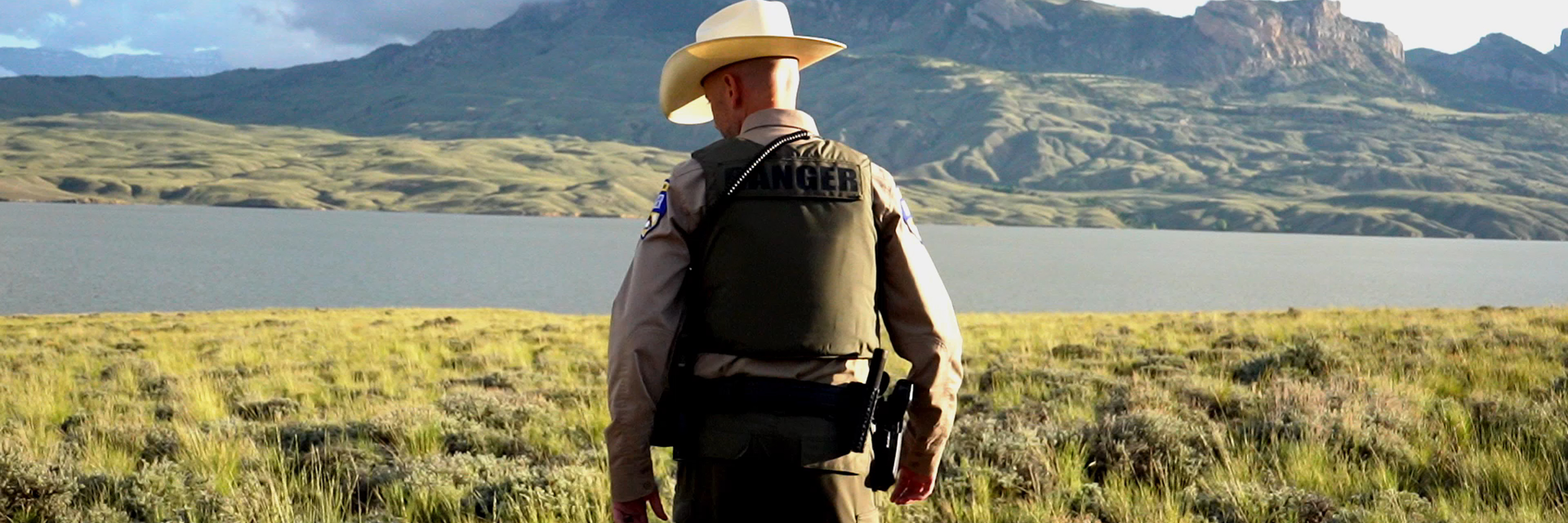
Wyoming Park Rangers have police powers and enforce state laws and park regulations. Wyoming Park rangers have law enforcement authority and do carry firearms and other defensive equipment as they seek to achieve respect for nature by building good relationships with local communities and the visiting public. Park Rangers also enforce laws and regulations regarding campfires and other fires on parklands. Our Park Rangers are the primary police agency in their parks. Law Enforcement Rangers experience the same incidents and calls for service as other law enforcement officers in our nation.
Interpretive and Education Rangers provide a wide range of informational services to visitors. Some rangers may provide interpretive programs to visitors intended to foster stewardship of natural resources through guided tours about the park's history, ecology, campfire talks, social media, web based outreach and historical re-enactments. All uniformed rangers, regardless of their primary duties, are often expected to be experts on the resources in their care, whether they are natural or cultural.
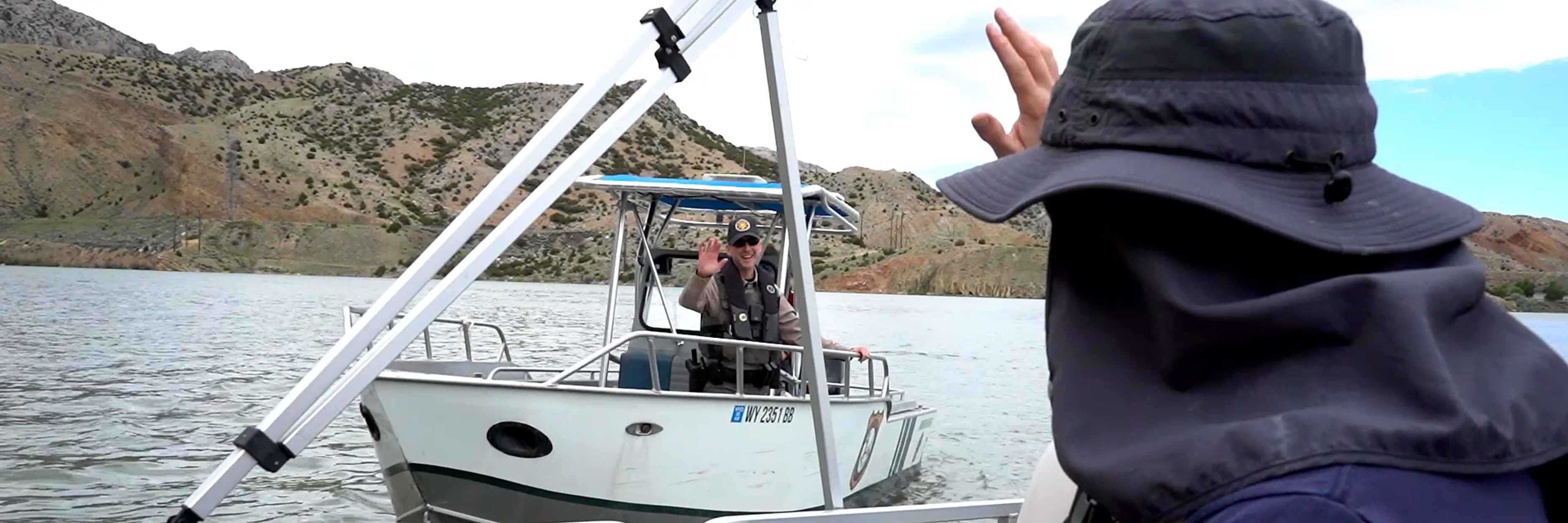
Park Rangers are often trained in emergency medical care and participate in search and rescue to locate lost or injured persons in the parks. Park Rangers also maintain certifications in medical care. Depending on the needs of the park where assigned, rangers may participate in high-angle rescue, swift-water rescue, ice rescue, boat patrol operators, mounted patrol and other emergency and rescue functions.
Park Rangers are often the first to spot wildland fires and are often trained to engage in wildland firefighting and rangers will call for resources to combat fires and evacuate persons from the area pending the arrival of additional firefighters.
Park Rangers are responsible for protecting the natural resources or cultural sites for which they work. This includes obtaining and preserving knowledge about the area. Park Rangers are expected to protect cultural resources and archaeological sites, monitor sensitive areas, and inform others about their findings.
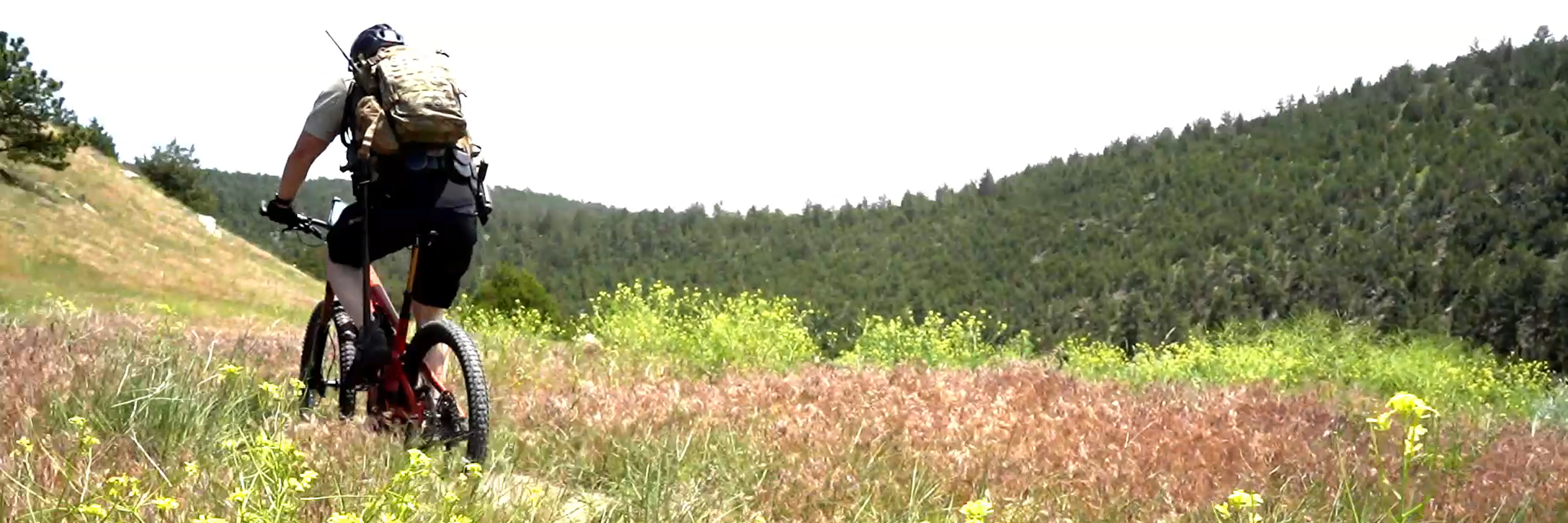
Park Rangers perform light maintenance on facilities, infrastructure or equipment as part of their duties. They help in preparing for winter closures and spring reopening. Rangers are often the first to discover vandalism or weather-related damage to park roads, trails and campgrounds.
Park Rangers also work "behind the scenes" administrative task to ensure the continued operation of the parks. Park rangers may help set policy for the parks, or handle park budgets, computers work and technology, human resources, or other fields related to the administration of parks. In the case of management these positions are usually filled by individuals who have moved up from field-based park ranger positions.

HISTORY OF PARK RANGERS WHAT WYOMING RANGERS DO RESERVE PARK RANGERS BECOME A RANGERCONTACT
How to Become a Park Ranger
Park rangers are often said to be the keepers of our nation’s natural resources and protected public lands. Their mission it is to preserve and protect our nation’s local, state and national parks for public use and enjoyment today, and for many years to come. Park rangers are there to educate the public, enforce the law, as well as to implement and support conservation efforts so future generations can enjoy these ecologically and historically significant sites.
Those interested in learning how to become a park ranger should begin by determining if they would like to serve in a municipal, state or national park, and whether they would be better suited for working in law enforcement and protection, or interpretation and visitor services.
The Wyoming State Park Ranger Law Enforcement Program provides for protection of park resources; public safety, protection of visitor experiences; and provide for safe, secure and orderly state parks, historic sites and trails. The SPHST system employs community oriented based policing. These practices focus on principles such as partnerships, problem-solving, area-wide responsibilities, proactive education and influence, fundamental interpretation and enforcement of rules and regulations, adaptability, and flexibility, which promotes safety, security, order, and voluntary compliance.
Wyoming State Parks follow the Ranger First philosophy. The Ranger First philosophy is a mindset and proactive orientation, based on Community Oriented Policing, that values problem solving, visibility, influence and education, informal relationships, networking within local communities, local decision making, local accountability, planning, transparency, and fundamental interpretation and enforcement to achieve safe, secure, and orderly State Parks, Historic Sites and Trails and voluntary compliance with Park Rules and Regulations and other laws. SPHST uses the Ranger First style of management in parks policy and the principles of community oriented based policing and commonly accepted principles which govern Park Ranger Enforcement activities shall be known as Ranger First.SPHST Park Rangers serve as role models for building collaborative relationships to implement Ranger First and they use their position to influence and educate others about acceptable behavior. Park Rangers must take this leadership role and therefore, must constantly emphasize and reinforce Ranger First vision, values, and mission and support and articulate a commitment to community policing as the dominant way to manage the facility. Park Rangers must use their leadership to educate and influence staff, park guests and the local community about proper behavior in their area and to create a culture of voluntary compliance. Public respect is essential to Ranger First and to this end the Park Ranger must render impartial dealings by being consistent, open, and fair with all visitors.

Wyoming Park Ranger Responsibilities
We are looking for a candidate that will:
Qualifications
Other Information
An offer of employment is contingent upon the successful completion of a full background check. As marijuana is an illegal substance under federal law and use of marijuana will disqualify any candidates applying for this position.
View Places on Wyoming Map
View Full List of Wyoming State Parks
View Full List of Wyoming Historic Sites
View Places on Wyoming Map
View Full List of Activities & Amenities
Archery Range
Beach
Biking
Boat Dock/Ramp
Boating
Cabins/Yurts
Camping - Tents
Camping - RVs
Dump Station
Enclosed Lodges
Events & Wedding Spaces
Fishing
Fishing Pier ADA
Geocaching
Gift Shop
Group Picnic Shelters
Hiking
Historical Features
Horseback Riding
Horse Facilities
Horseshoe Pits
Hunting
Marina
Museums & Interpretive Centers
Off Road Vehicles
Overlooks
Paddleboards
Petroglyphs
Picnic Areas
Playground/s
Research Library
Restroom Facilities
River Access
RV Hookups
Self-Guided Interpretive Trail
Shower Facility
Skiing & Snowshoeing
Snowmobiles
Swimming
Visitor Center
Volksmarch
Volleyball Courts
Wildlife Viewing
Winter Sports
Other
Wyoming Outdoor Recreation
Sunscreen Sponsorship
Our Apps